Wine serving temperatures: a cheat sheet by style
Temperature changes how a wine tastes more than almost anything else you control at home. Serve a red too warm and it tastes flabby and alcoholic. Serve a white too cold and it tastes of very little.
What temperature should each wine be served at?
| Style | Examples | Serve at |
|---|---|---|
| Sparkling | Prosecco, Cava, non-vintage Champagne | 6-8°C (43-46°F) |
| Fine sparkling | Vintage Champagne, prestige cuvées | 8-10°C (46-50°F) |
| Light, crisp white | Sauvignon Blanc, Pinot Grigio, Albariño, Muscadet | 7-10°C (45-50°F) |
| Aromatic white | Riesling, Gewürztraminer, Grüner Veltliner | 8-10°C (46-50°F) |
| Full white | Oaked Chardonnay, white Burgundy, Viognier | 10-13°C (50-55°F) |
| Rosé | Provence rosé, most dry rosé | 8-12°C (46-54°F) |
| Light red | Beaujolais, light Pinot Noir, Frappato | 12-14°C (54-57°F) |
| Medium red | Burgundy, Chianti, Rioja Crianza, Merlot | 14-16°C (57-61°F) |
| Full red | Cabernet Sauvignon, Syrah, Barolo, Malbec | 16-18°C (61-64°F) |
| Sweet white | Sauternes, late harvest Riesling, Moscato | 6-8°C (43-46°F) |
| Light fortified | Fino and Manzanilla sherry | 7-9°C (45-48°F) |
| Tawny port | 10 and 20 year old tawny | 10-14°C (50-57°F) |
| Vintage port | Vintage and LBV port | 16-18°C (61-64°F) |
Why does temperature change the taste?
Warmth makes aromas evaporate faster, so a warmer wine smells more intense. That sounds like a good thing until alcohol joins in. Above about 18°C, alcohol starts to dominate the nose and the palate, and red wines lose their freshness.
Cold does the opposite. It mutes aromas and makes acidity and tannin feel sharper. That's why crisp whites and sparkling wines are served cold: it keeps them lively. It's also why a big, tannic red served cold tastes hard and bitter.
So the rule of thumb works out neatly: the lighter and crisper the wine, the colder you serve it. The fuller and more tannic, the warmer.
Isn't red wine supposed to be at room temperature?
That advice comes from rooms in old European houses without central heating, which sat around 16 to 18°C. Most living rooms today are closer to 21 to 23°C, and a red at that temperature tastes soft and hot.
A bottle stored in a warm kitchen usually benefits from 20 minutes in the fridge before serving. Light reds like Beaujolais or a simple Pinot Noir can take 30 to 40 minutes. Gamay in particular is made for it, see our Gamay and Beaujolais guide.
Aren't whites supposed to come straight from the fridge?
A kitchen fridge runs at about 4 to 5°C, which is colder than any wine needs. For a crisp Sauvignon Blanc that's fine, because it warms up quickly in the glass. For a good white Burgundy or an oaked Chardonnay, it hides most of what you paid for. Take richer whites out 15 to 20 minutes before you pour.
How do you get wine to the right temperature fast?
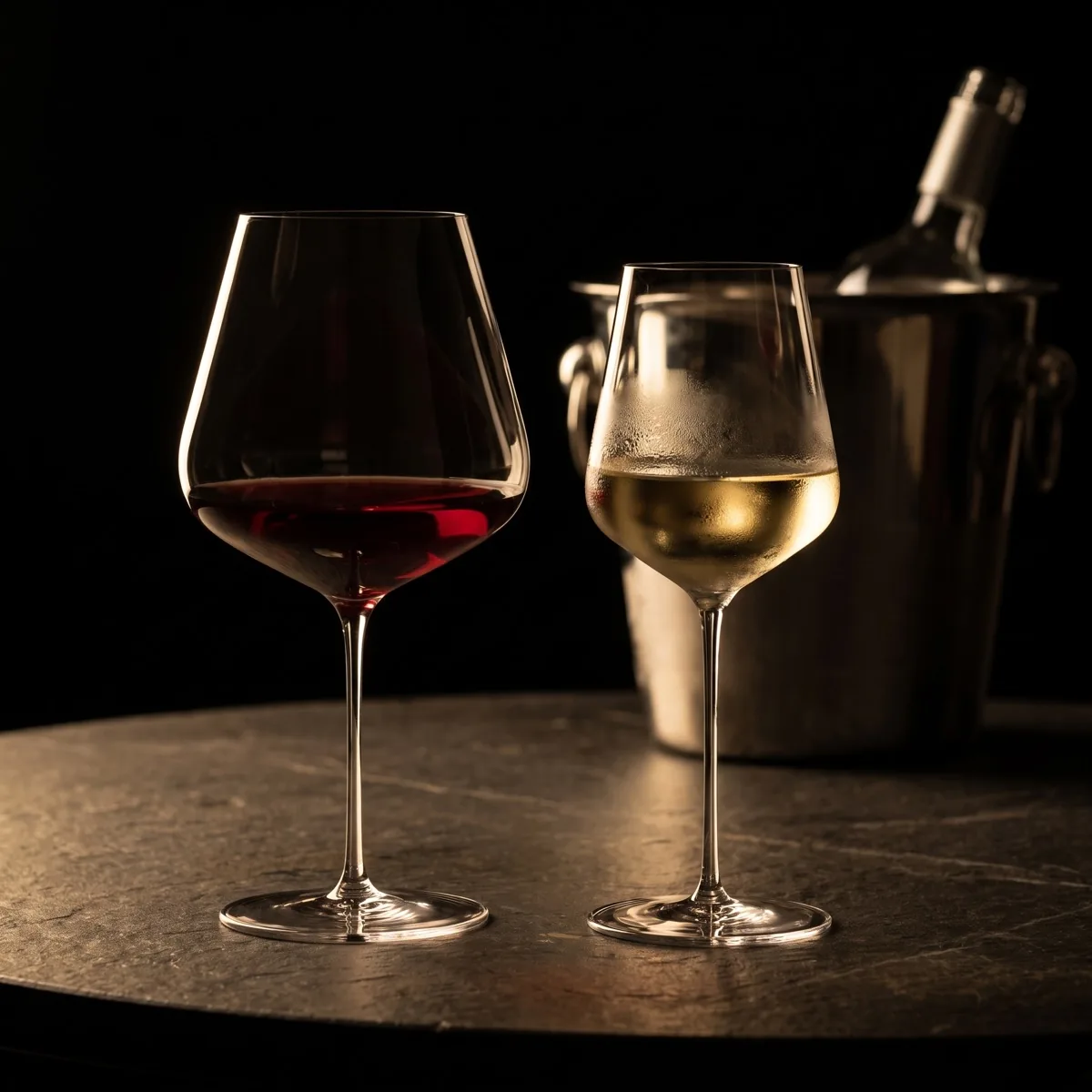
- Ice bucket with water. Fill a bucket half with ice and half with water. The water touches the whole bottle, so it chills in about 15 to 20 minutes, much faster than ice alone or the fridge.
- Freezer. About 30 minutes takes a room-temperature white down to serving temperature. Set a timer. A forgotten bottle can freeze and push its cork out.
- Wet towel. Wrap the bottle in a damp tea towel and put it in the freezer. The evaporation speeds things up a little.
- Warming up. If a red is too cold, pour it and hold the glass in your hands for a few minutes. Don't put a bottle near a radiator.
Does it matter how long the wine sits in the glass?
Yes. A glass warms up by roughly a degree every few minutes in a warm room. Pour smaller amounts and keep the bottle in a cool place or an ice bucket between pours, and the last glass will taste as good as the first. For whites, it's better to start a little too cold and let the glass warm up than to start too warm.
A simple routine that works
My own setup makes this easy: I have a wine cellar that sits at a good temperature, plus a wine fridge, so most bottles start out close to where they should be. If you store wine well, serving it well is mostly a matter of a few minutes either way.
- Keep all your wine at cellar temperature, 12 to 14°C, if you can.
- Before dinner, put whites and sparkling in the fridge for an hour or two.
- Take full whites out 15 minutes before pouring.
- Pour light reds straight from the cellar. Leave full reds out for 20 to 30 minutes.
If your bottles live in a wine fridge or cellar, that's most of the work done. And if you're unsure which bottle to open in the first place, Smart Wine Cellar's Food Matcher suggests one from your own cellar based on what you're cooking.
Questions people also ask
Should red wine be served at room temperature?
Only if your room is about 16 to 18°C. The advice dates from before central heating, and a modern living room at 22°C makes red wine taste soft and alcoholic. A short spell in the fridge fixes it.
How long should I put red wine in the fridge?
About 20 minutes for a full-bodied red and 30 to 40 minutes for a light red like Beaujolais, starting from a warm room.
What is the fastest way to chill a bottle of wine?
Put it in a bucket of ice and water, not ice alone. The water touches the whole bottle, so it cools in about 15 to 20 minutes. Adding a handful of salt speeds it up a little more.

Food Matcher
Tell us what's for dinner and we'll find the bottle to match
Say what you're eating and the Food Matcher picks the wines from your own cellar that pair best with tonight's dish.