Wine and cheese pairings that actually work
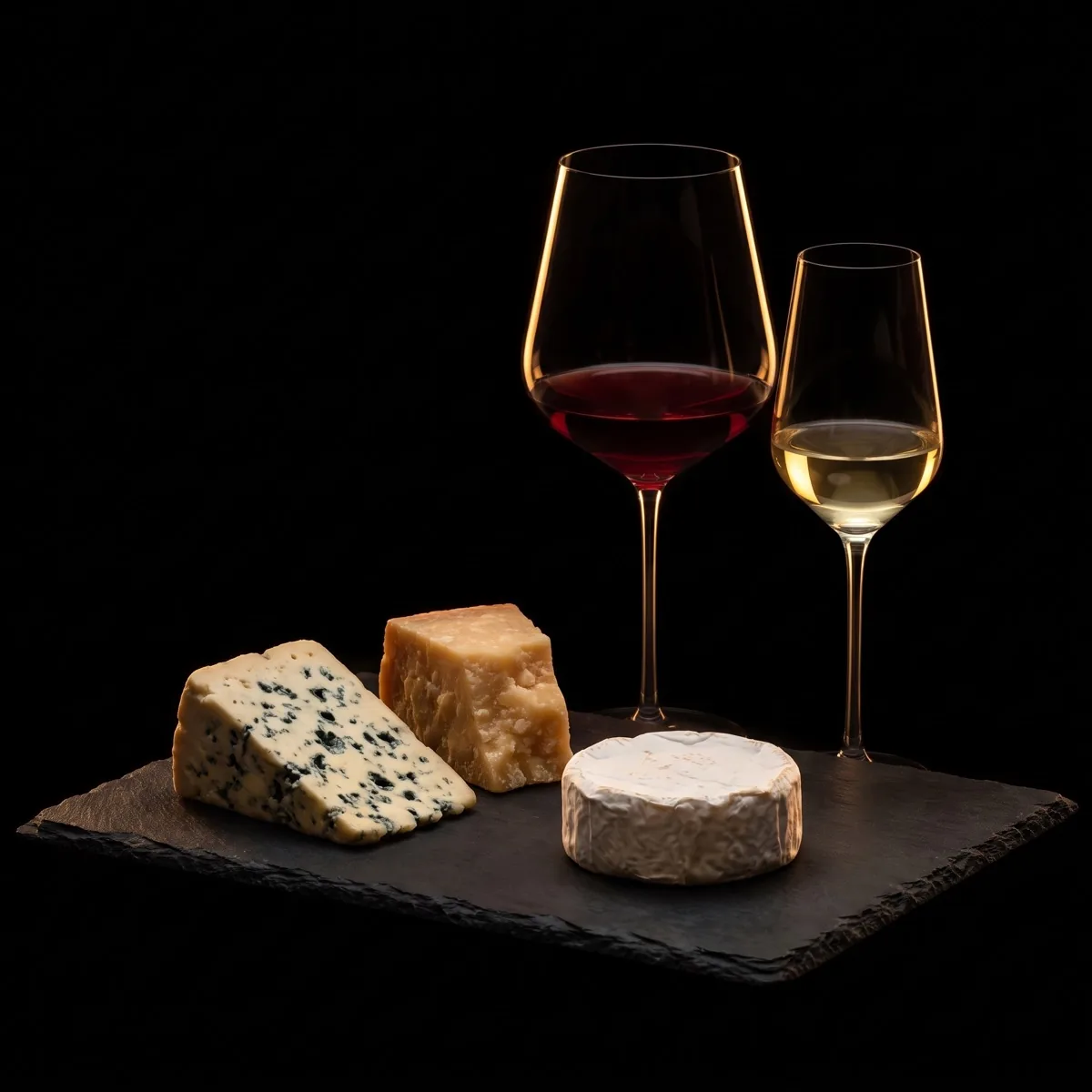
Wine and cheese is supposed to be a natural match, but plenty of combinations fall flat. The textbook advice is that white wine is the safer choice for most cheeses.
I'll be honest: that's rarely what I drink. With cheese I reach for sweet and fortified wines. Port is my favourite, and Sauternes is easy to forget but lovely with cheese too. Otherwise, a nice red. Below are the general rules and the pairings that reliably work, but don't let them talk you out of a glass of port.
What are the basic rules?
White wine is more cheese-friendly than red. Tannin in red wine reacts badly with the fat and salt in many cheeses, especially creamy ones, and can taste bitter or metallic. Whites have acidity without tannin, which cuts through fat.
Match intensity. A delicate fresh cheese needs a delicate wine. A strong blue or a long-aged hard cheese can stand up to something powerful.
Salt loves sweet. Salty cheeses like Roquefort and Stilton are excellent with sweet wines. The contrast is the point.
What grows together goes together. Cheeses and wines from the same region often pair well because local cooks have matched them for centuries.
What wine goes with each cheese?
| Cheese | Wine | Why it works |
|---|---|---|
| Fresh goat cheese, Crottin de Chavignol | Sancerre, Sauvignon Blanc | Acidity matches tang; same region |
| Brie, Camembert | Champagne, Chardonnay | Bubbles and acidity cut the creaminess |
| Triple crème (Brillat-Savarin) | Champagne, Crémant | Same idea, richer cheese |
| Washed rind (Époisses, Munster) | Gewürztraminer, white Burgundy | Aromatic wine stands up to the smell |
| Aged Comté, Gruyère | Oaked Chardonnay, Jura whites | Nutty cheese, nutty wine |
| Parmigiano Reggiano | Chianti Classico, Lambrusco | Acidity and fruit against salt and crunch |
| Manchego | Rioja, Tempranillo | Classic Spanish pairing |
| Aged Cheddar | Cabernet Sauvignon, tawny port | Firm cheese can take tannin |
| Aged Gouda | Tawny port, Amontillado sherry | Caramel notes on both sides |
| Stilton | Vintage or LBV port | Salt and sweetness |
| Roquefort | Sauternes | A famous salty-sweet match |
| Gorgonzola | Moscato d'Asti, Recioto | Sweetness balances the bite |
| Feta, halloumi | Assyrtiko, Albariño | Crisp, salty whites |
| Mozzarella, burrata | Light Italian whites, rosé | Gentle wine for a gentle cheese |
Which red wines work with cheese?
Reds do best with hard, aged cheeses that have lost moisture and gained savoury depth. Parmesan, Manchego, aged Cheddar, Comté and Pecorino all handle tannin well. Lighter, fruitier reds like Beaujolais or Pinot Noir are more flexible than big Cabernet or Syrah and can even work with milder soft cheeses.
The worst matches are usually tannic reds with soft, bloomy cheeses like Brie and Camembert, and any big red with blue cheese.
Why does sweet wine go with blue cheese?
This is the pairing I come back to most. Blue cheese is salty, pungent and creamy. A sweet wine with good acidity, like Sauternes, port or a late harvest Riesling, softens the salt and the sharpness while its acidity cuts through the fat. The same principle explains salted caramel. Stilton with port and Roquefort with Sauternes are the two classics.
What should you serve with a cheese board?
If you're serving a mixed board and only want to open one or two bottles:
- One bottle: a dry or off-dry Riesling, a Champagne or a lightly oaked Chardonnay. All three handle soft, hard and goat cheeses.
- Two bottles: add a tawny port or a sweet white for the blue cheese and the aged hard cheeses.
My own board usually skips the white altogether: a port, a Sauternes if there's a blue cheese, and a good red for the hard, aged cheeses.
Let cheese come to room temperature for 30 to 60 minutes before serving. Cold cheese tastes muted, just like cold red wine.
What about crackers and extras?
Plain crackers or bread keep the focus on the cheese and wine. Strongly flavoured extras can change a pairing: quince paste and honey make a cheese seem sweeter, so the wine needs to be sweet enough to keep up. Pickles and chutneys are hard on most wines.
Where to start
If you're new to it, start with three classic pairs and compare: goat cheese with Sancerre, Manchego with a Rioja, and Stilton with port. You'll quickly learn which contrasts and matches you like.
For dinner rather than a cheese board, Smart Wine Cellar's Food Matcher takes what you're eating and suggests the best bottles from your own cellar, with the reasoning behind each pick.
Questions people also ask
Does red wine go with cheese?
Some red wines do, especially with hard, aged cheeses like Parmesan, Manchego and aged Cheddar. Big, tannic reds tend to taste bitter and metallic with soft, creamy cheeses, where white or sparkling wine is a better match.
What wine goes with a mixed cheese board?
A dry Riesling, a Champagne or a lightly oaked Chardonnay copes with the widest range of cheeses. Add a tawny port or a sweet wine if there is a blue cheese on the board.
What wine goes with goat cheese?
Sauvignon Blanc, especially Sancerre from the Loire, which grows next to the Chavignol goat farms. Its acidity matches the tang of fresh goat cheese.

Food Matcher
Tell us what's for dinner and we'll find the bottle to match
Say what you're eating and the Food Matcher picks the wines from your own cellar that pair best with tonight's dish.