What temperature should you store wine at?
Aim for 12 to 14°C (54 to 57°F), keep it steady, keep it dark, and don't let the air get bone dry. That's the range most cellars sit at naturally and the one wine fridges are set to out of the box. You have more wiggle room than you might think, as long as the temperature doesn't swing.
Why does temperature matter so much?
Wine changes in the bottle through slow chemical reactions. Fruit flavours fade and turn into something more savoury, tannins soften, and colour shifts. Like most chemical reactions, these speed up as it gets warmer. A rough rule from chemistry is that reaction rates about double for every 10°C rise, so a bottle kept at 22°C ages noticeably faster than one at 12°C.
Faster isn't better. Wine aged too warm tends to lose its fresh fruit before the good savoury notes have time to develop, and at the extreme it tastes stewed or "cooked".
Go too cold and the opposite happens: ageing almost stops. That isn't harmful, but it defeats the point of cellaring. Below freezing is a real problem, because the wine expands as it freezes and can push the cork out.
What is the ideal temperature range?
| Condition | Range | What it means |
|---|---|---|
| Ideal | 12-14°C (54-57°F) | Slow, even ageing. Where most cellars sit. |
| Fine | 10-16°C (50-61°F) | No real harm, a little faster or slower ageing |
| Getting warm | 17-21°C (63-70°F) | Fine for months, too warm for long-term ageing |
| Risky | Above 25°C (77°F) | Ageing speeds up, fruit fades, damage over time |
| Damage | Above 30°C (86°F) | Cooked flavours, pushed corks, leaking bottles |
If your storage sits anywhere in the "fine" band all year, you're in good shape.
Why is a steady temperature more important than the exact number?
Every time a bottle warms up, the wine expands a little. When it cools, it contracts. Day after day, that movement can work air in past the cork and wine out of it. Seepage around the capsule is the classic sign.
That's why a cellar that drifts slowly from 10°C in winter to 16°C in summer is perfectly happy, while a cupboard next to the oven that hits 25°C every evening and 15°C every night is not. Slow seasonal change is fine. Daily swings are what to avoid.
How much humidity does wine need?
Most guides put the sweet spot at 60 to 70% relative humidity, and anything from about 50 to 80% is fine.
Very dry air can dry out the outer end of the cork over many years, which lets more oxygen in. Very damp air won't hurt the wine, but it grows mould on labels and can rot cardboard boxes, which matters if you ever plan to sell a bottle.
If your bottles have screw caps, humidity barely matters for the wine itself.
What does my own cellar look like?
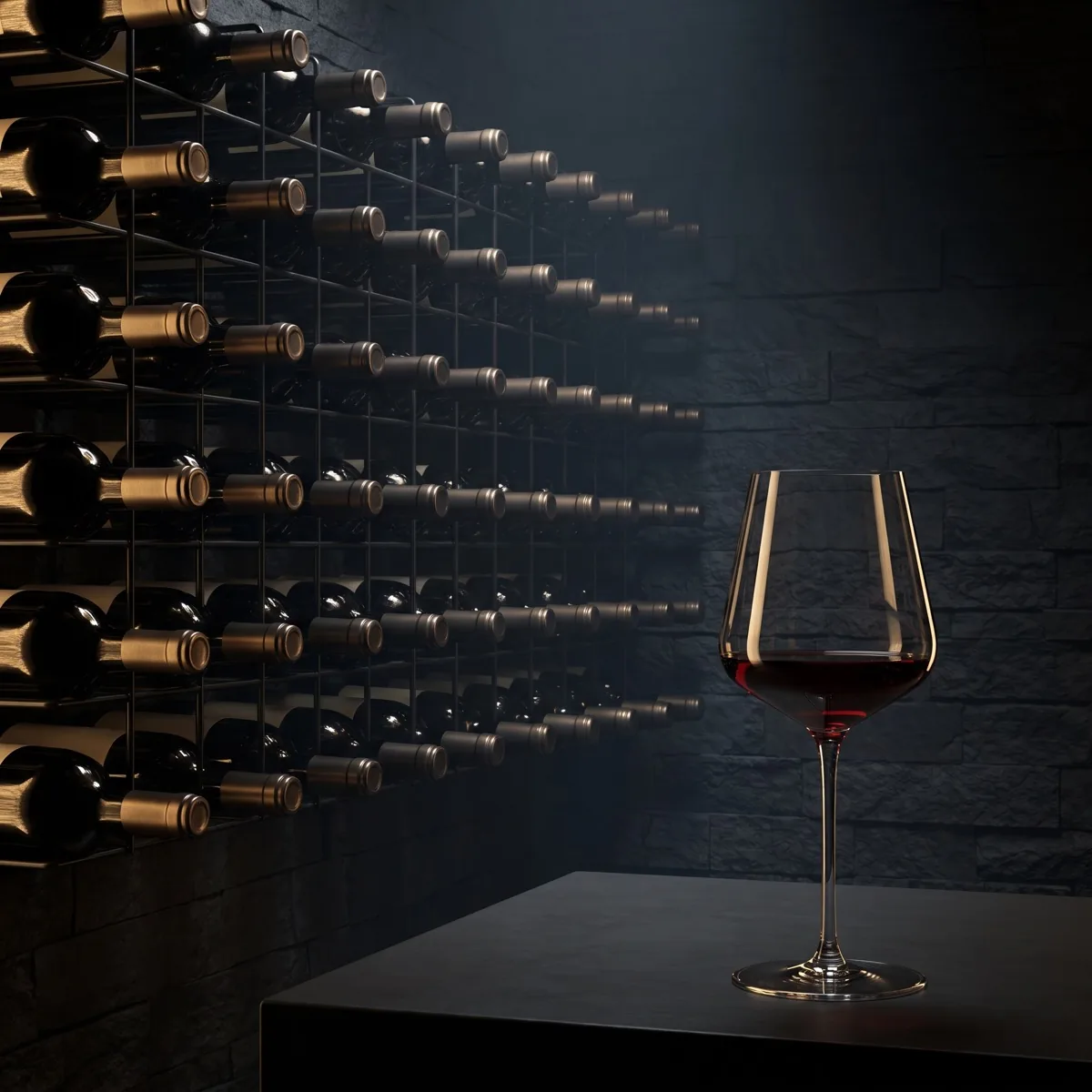
My wine lives in a room in my basement that holds a near-perfect temperature all year round. It's dark, and the temperature hardly moves from week to week, which matters more than hitting an exact number. I follow it through a Home Assistant sensor, so I can see the cellar temperature right in the Smart Wine Cellar app.
If I built it again, I'd do one thing differently. I've built two racks for it. When I built the first, I thought it was big enough for all my bottles. It wasn't, so the second is bigger and lets me stack bottles on top of each other, and I'd build the first one that way too. My advice: build as big as you can. A collection always grows faster than you expect.
What else should you keep in mind?
Light. Sunlight and bright fluorescent tubes can cause "light strike", a cabbage-like off smell. Clear and pale green bottles are most at risk, which is why sparkling wine and rosé suffer first. Keep bottles in the dark or in a closed cabinet.
Vibration. Constant vibration is often blamed for disturbing sediment and speeding up ageing. The evidence is thin, but there's no reason to store wine on top of a washing machine either.
Smells. Corks are slightly porous. Storing bottles next to paint, petrol or cleaning products for years isn't a great idea.
Position. Lie cork-sealed bottles on their side so the wine keeps the cork moist. Screw-capped bottles can stand up. There's more on this in should wine bottles be stored on their side?
What if your home is warmer than 14°C?
Most homes are, at least in summer. You have a few options:
- Find the coolest, darkest spot you have. An inside wardrobe, the space under the stairs or a basement corner usually beats the kitchen by several degrees. A cheap thermometer that logs highs and lows will tell you in a week whether it works.
- Buy for the time you can store. If your best spot sits at 18 to 20°C, keep bottles you plan to drink within a year or two there and leave long-term ageing to someone else.
- Get a wine fridge. It's the simplest fix for a warm flat. Our guide to wine fridges vs cellars covers what to look for.
- Use professional storage for the few bottles that really need a decade or more.
Once your bottles have a good home, the next step is knowing what's in it. Smart Wine Cellar's virtual wine rack maps every bottle to its row and column, and if you have climate sensors running through Home Assistant, it can warn you when the temperature or humidity drifts out of range.
Questions people also ask
Is 18°C too warm to store wine?
For a few months, 18°C (64°F) is fine. Over several years it ages wine faster than you probably want, so bottles meant for the long haul are better off somewhere cooler.
Can I store wine in the kitchen fridge?
For a few weeks, yes. A kitchen fridge runs at about 4°C, which slows ageing almost to a stop, and the air is dry, so it is a poor home for bottles you plan to keep for years.
Does red wine need a different storage temperature than white?
No. Red, white, rosé and sparkling all keep best at the same 12 to 14°C. Serving temperatures differ, but storage temperatures do not.

Virtual Wine Rack
Your whole cellar mapped out, find any bottle by its exact spot
A visual map of your racks. Find and re-order any bottle by its exact row and column, and keep an eye on the climate.