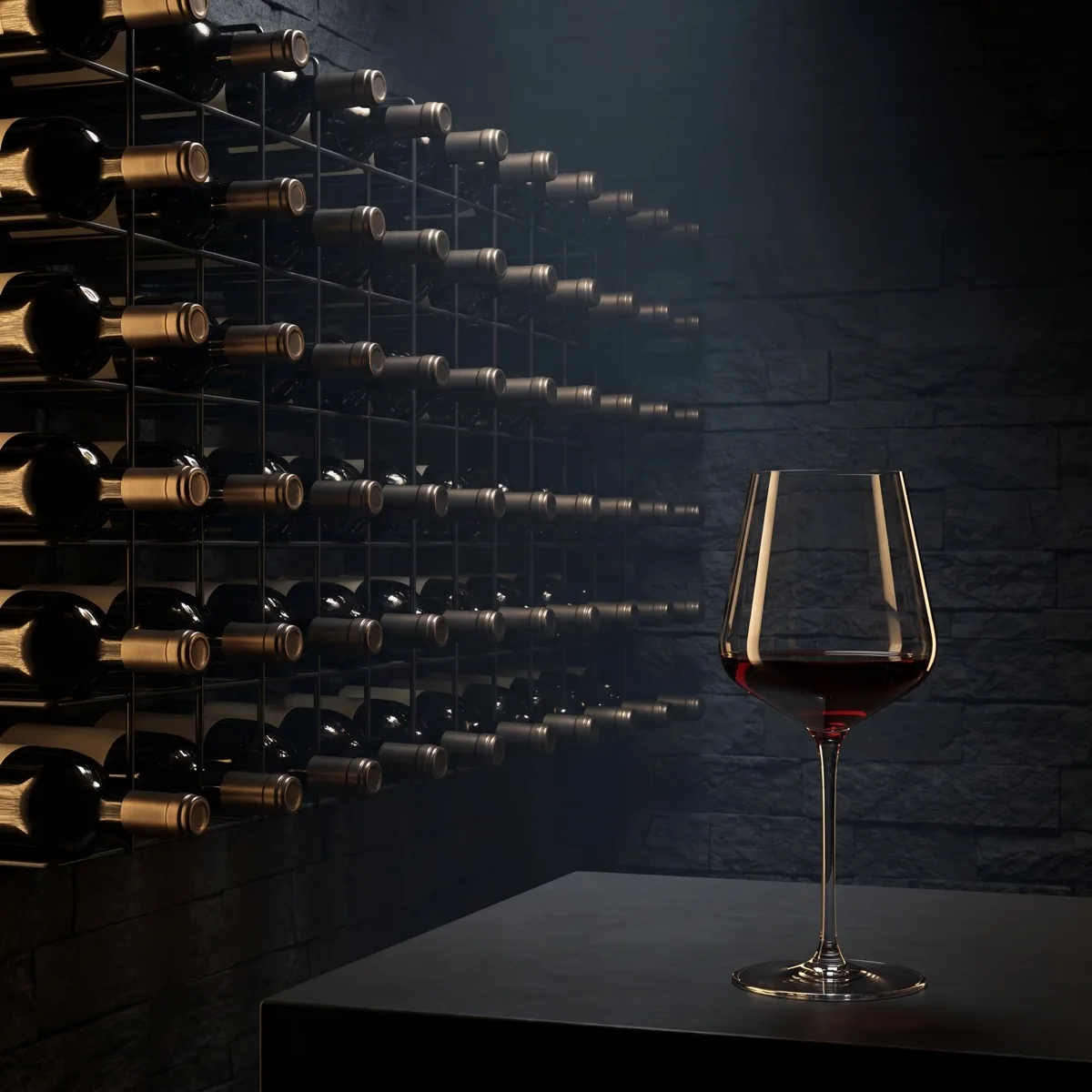
Wine fridge vs wine cellar: what you actually need
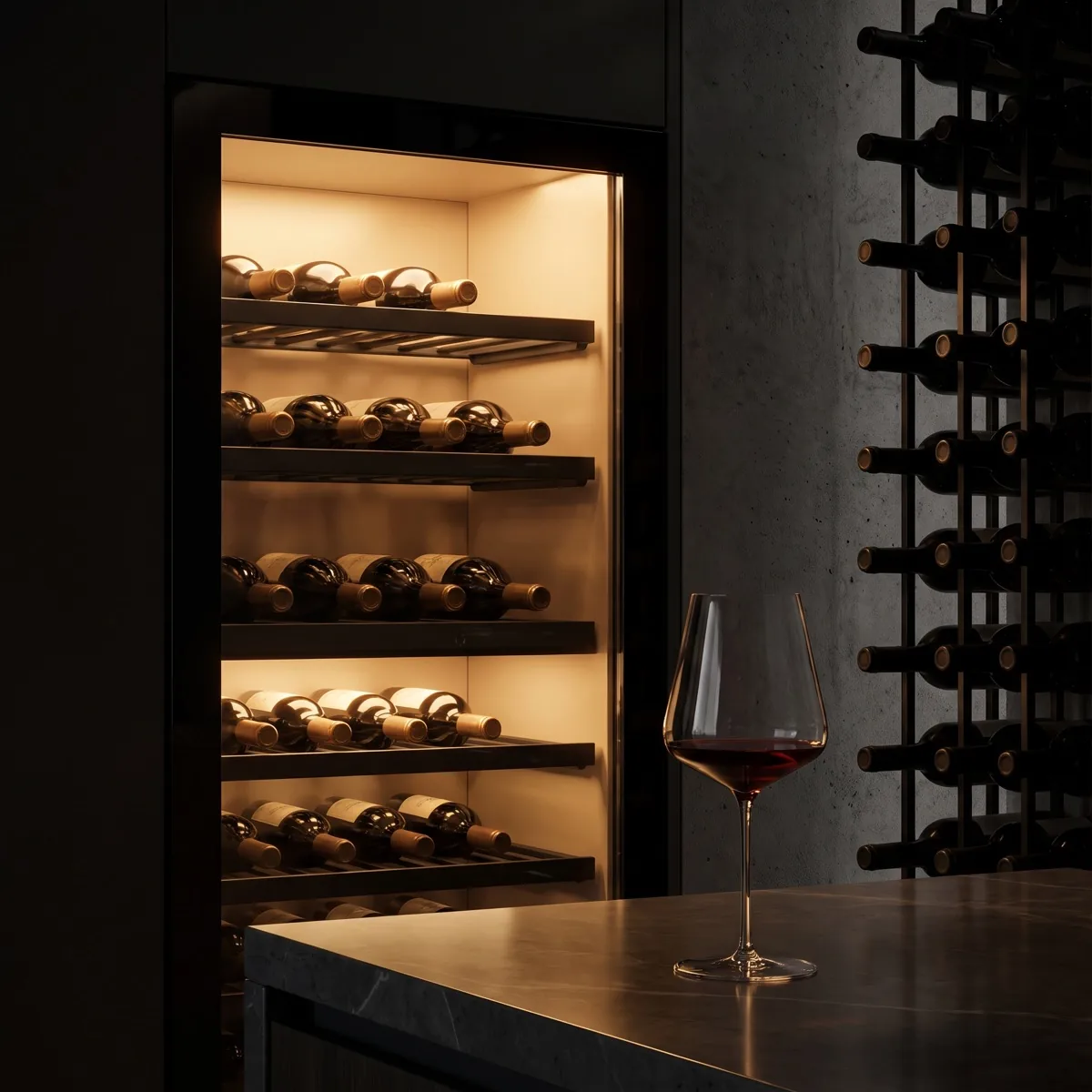
If your home is warm and you want to keep wine for more than a year or two, you need some kind of cooled storage. The choice is usually between a wine fridge and a cellar. For most people the answer is a fridge, and the question is mostly which one.
I have both. The wine fridge sits in the kitchen and holds the short-term bottles and the Champagne, while the cellar is for long-term storage. If you're buying a wine fridge, my advice is simple: buy one as big as you think you'll need, and make sure it has multiple temperature zones.
What does each option do?
| Wine fridge | Passive cellar | Cellar with cooling unit | |
|---|---|---|---|
| What it is | A cabinet with its own cooling | An underground space that stays cool naturally | A room insulated and cooled by a dedicated unit |
| Capacity | 12 to about 300 bottles | Whatever fits | Hundreds to thousands |
| Cost | Low to medium | Depends on the building | High |
| Works in a warm flat? | Yes | No | Yes, with work |
| Best for | Most collectors | Lucky owners of cool basements | Large collections |
When is a wine fridge the right choice?
A wine fridge makes sense if:
- You have under a few hundred bottles.
- Your home has no naturally cool space.
- You rent, or may move.
- You want something working this week rather than a building project.
Good wine fridges keep the temperature steady within a degree or so, limit vibration, keep out light, and hold some humidity. They work in any room, though they last longer and use less power when the room isn't very hot.
Compressor or thermoelectric?
Compressor fridges cool the same way a kitchen fridge does. They're more powerful, cope with warm rooms, and suit larger capacities. Good ones mount the compressor on dampers to limit vibration.
Thermoelectric fridges use a solid-state cooling element with no compressor. They're quiet and almost vibration free, but much weaker. Most can only cool to about 12 to 15 degrees below room temperature, so in a 28°C summer room they struggle to reach cellar temperature. They're best for small capacities in cool rooms.
For long-term storage in a home that warms up in summer, choose a compressor model.
What else should you look for?
- Capacity, honestly measured. Fridges are rated for standard Bordeaux-shaped bottles. Burgundy, Champagne and wider bottles take more space, so real capacity can be 20 to 30% lower.
- Buy bigger than you think. Almost everyone fills their first wine fridge within a year. Aim for about 50% more space than you have bottles.
- UV-protected glass or a solid door.
- Wooden or sliding shelves that make it easy to see labels.
- Built-in or freestanding. Built-in models vent at the front and can go under a counter. Freestanding ones need space around them for ventilation.
- Multiple temperature zones. One zone at cellar temperature for storage, another colder for whites and Champagne ready to pour. A single zone works for pure storage, but most people end up wanting both.
When does a cellar make sense?
A cellar is worth considering when:
- You have, or plan to have, more than a few hundred bottles.
- You own your home and have a basement or a room you can give up.
- You want the space itself to be part of the pleasure.
Passive cellars are underground rooms that stay cool on their own. If your basement stays between 10 and 16°C year round with no big daily swings, you may already have one. A thermometer that records highs and lows will tell you within a few weeks.
Active cellars use a dedicated cooling unit plus insulation and a vapour barrier. They work almost anywhere but need proper planning, since bad insulation leads to condensation and mould.
What about a fridge plus off-site storage?
Many collectors use a fridge for wines they'll drink in the next few years and professional storage for the long-term bottles. It's often cheaper than a cellar and gives perfect conditions for wines that need decades.
Planning the layout
Whether it's a 40-bottle fridge or a full cellar, knowing where each bottle is saves a lot of pulling and searching. Smart Wine Cellar's 3D wine rack lets you build a model of your own setup, including wine fridges, racks, shelves and bins, with each bottle in its spot. It's free on every plan.
Questions people also ask
Is a wine fridge the same as a regular fridge?
No. A regular fridge runs at about 4°C and dries the air, which is too cold and too dry for long-term storage. A wine fridge holds 10 to 18°C and is designed to keep vibration and humidity loss low.
Can a wine fridge be used for long-term ageing?
Yes, as long as it is a good one set to about 12 to 14°C and placed somewhere it does not have to fight extreme heat. Many collectors age wine in fridges for decades.
Are dual-zone wine fridges worth it?
Usually, yes. All wine ages best at the same temperature, but a fridge with two or more zones can also keep whites and Champagne ready to serve, which is how most people end up using one.

3D Wine Rack
Your wine rack in 3D, every bottle right where it lies
See your real rack in 3D, down to the finish, the bins and each bottle in its spot. Turn it, zoom in and tap any bottle. Free on every plan.